After-School Meals

A LITTLE-KNOWN PROGRAM
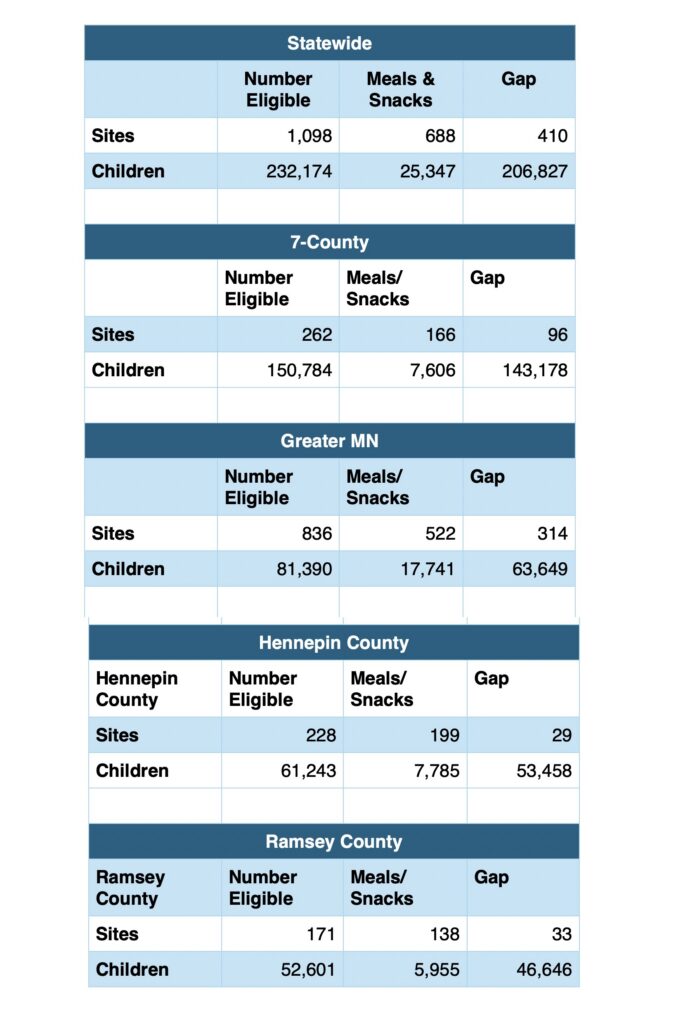
When began analyzing statewide data for after school meals in 2025. That led to what we know today: There are 232,174 children who were eligible for an evening snack or meal, yet only 25,347 were participating in this federal nutrition program statewide.
Background
The federal program is called CACFP At-Risk and is easier to implement than CACFP. “At-risk” in this context refers to the challenge of meeting nutritional needs when kids are away from school or home.
Unfortunately, the low participation rate is attributed to schools and community organizations needing to develop complementary academic programming, and then adhering to the congregate dining policy required to operate this meal program.
Although the program also requires additional staffing and start-up funding, once operational the reimbursement revenue does sustain the meal or snack program. That’s because it has a higher reimbursement value.
We continue to see a large opportunity to increase the number of sites offering after-school meals to improve health and academic outcomes through the funding of staff positions at school districts willing to start programs and support promotional efforts to build awareness and enrollment.
Challenges
There are many challenges with these lesser-known programs. There are:
- Complex tracking and reporting requirements.
- Limited administrative hours.
- Staffing challenges for food service workers.
Compliance requirements can be seen as cumbersome, and there is a shortage of the required program sponsors.
It can be difficult to feed kids after classes, especially when they’re participating in extra-curricular interests.
Our approach
We collaborated with the Minnesota Department of Education and identified two initial strategies to feed hungry children after school:
- Enlist more out-of-school activities in CACFP At-Risk meal program at sites that participate in CACFP.
- Move more programs from just snacks to serving more substantial evening meals. Snacks generate less federal reimbursement money, and offer kids less food.
In partnership with our stakeholders, we are:
- Raising awareness of the program and of the greater opportunity reflected in supper versus snack service.
- Reaching out to after-school academic programs in schools and communities.
- Working with summer feeding sites to offer CACFP suppers.
- Migrating existing snack participation to supper or adding supper service to a program.
- Using incentives to spur participation.
Our Goal
Provide 1 million more meals by working with Minnesota Department of Education and our stakeholders to increase the number of sites offering after-school meals.